Archive for Food

Eat your lawn: wild greens salad.

yardsalad.JPG

Why mow it when you can eat it?

Today I wandered around our yard with a basket and came back with a salad.

It had chickweed greens and flowers, dandelion greens, bittercress greens and flowers, creasy greens, violet leaves, and sorrel in it. Chickweed and violet are mild and moist, peppergrass and creasy greens are spicy with a hint of bitterness, dandelion leaves (before the flowers bloom) are pleasantly bitter, and sorrel is distinctly sour.

The boy thought it was too many flavors in one salad, but to me it just tasted like today: riotous spring!

Hint: If you want to encourage more edible (and medicinal) weeds in your yard, dig up a bit here and there. Lots of tasty plants like to grow on disturbed ground.

Comments (9)

Spring greens: wild onion tangle.

wildonion.JPG

You know your lawn is full of wild onions.

Go pull some.

(Make sure they’re wild onions, not something else that grows from a bulb. Hint: wild onions smell strongly of onion.)

Clean them up. (Tedious, but worth it.)

You also might want to shorten them. They do tend to tangle up.

Saute them with butter and salt.

So tasty.

(We had ours with spiced barley and goat chops.)

Comments (10)

Spring greens: peppergrass.

peppercress.JPGWild greens, anyone?

Early spring is the time to switch from sweet roots and spices to bittersharp new shoots and leaves. Time for cool air and new light after warm dark hibernation.

Peppergrass is one of my favorite spring greens. It’s also called “pepper cress” and “poor man’s pepper,” and it’s sprouting up all over my yard right now.

Young peppergrass leaves can be used anywhere you might use watercress. I like them mixed in scrambled eggs with a few wild onions. The flowers are tasty too (I saw one little plant blooming already) and the seeds can be sprinkled on food as a sharp, mustardy seasoning (”poor man’s pepper”).

UPDATE: I originally posted that this peppergrass was a Lepidium species. AnneTanne and Tammy pointed out that it looks a lot like Cardamine hirsuta. Now that I look at it, I’m convinced it’s a Cardamine, but I’m not sure which one (cresses are notoriously hard to identify). Calling it Lepidium was just lazy and spaced-out on my part — I do have a lot of Lepidiums in my yard, and I call them peppergrass too. So I had peppergrass = Lepidium in my head, and I didn’t bother to look it up. Live and learn.

(I grew up calling all peppery little cresses “peppergrass.” Perhaps I should teach myself some new common names to alleviate the species confusion? Alright. Cardamines are “bittercress” and Lepidiums are “peppercress.” Maybe I’ll try that. In any case, they’re all tasty in salad.)

Comments (20)

Guest Post: Passion Honey from Robin Rose

Robin RoseWelcome to the first ever guest post in the Herbwife’s Kitchen!

Robin Rose Bennett is a lovely plant person, herbalist, and teacher from the New York / New Jersey area. This post is her contribution to the Aphrodisiac Blog Party. (My own contribution should be up this evening.)

Here’s Robin Rose:

I’ve been teaching a class every February for years now called Herbal Love Medicine for Valentine’s Day. Each year I cook up a brand new Passion Honey, inspired by my own favorite aphrodisiac or sensually pleasing herbs, along with the input of the students after we’ve spent nearly 2 hours looking at, talking about, sniffing, and tasting the herbs and preparations I’ve brought in.

I’m always a tiny bit nervous that this new and different honey may not come out right — but it’s exciting, too, not to know what it will be like. It always comes out somewhere between really good and truly wonderful and delicious. The Passion Honey we made last week was off the charts!! I don’t actually measure anything as I’m creating, but these are my best guesses as to the amounts. As I go along, I stir and sniff, and stir and sniff. Highly recommended technique for cooking!

Robin Rose’s Passion Honey - February 2008

(All the herbs are organic and all are dried, unless otherwise noted.)

To 1 quart of organic dark buckwheat honey add approximately:

1/2 cup Orange blossoms*
3/4 teaspoon grated Nutmeg
2 tablespoons Damiana
3-4 tablespoons Vanilla extract
1 teaspoon Jasmine
2-3 tablespoons Maca root powder
3/4 ounce Rose glycerite**
1 teaspoon crushed up Cinnamon sticks***

We all tasted it and declared it amazing (as our knees grew weak). Normally I cook it on low for 30-45 minutes. We didn’t even do that as I’d run out of time. Now I have the pint that’s left steeping/infusing at room temperature at home, looking forward to what will happen to it as the flavors meld. Of course my sweetheart and I are sneaking in for tastes now and then because it’s simply irresistible.

Enjoy!

(For those who prefer things simpler — that’s usually me — one of my favorite past Passion Honeys was Roses and Vanilla beans in Linden Honey. It’s a yummy one, too!)

* Orange blossoms can be hard to get. You could put in crumbled or powdered sweet orange or tangerine peels instead — it won’t be the same, but still delicious.

** This rose glycerite was made with red (Rosa gallica), pink (Rosa centifolia), and Moroccan roses.

*** Cinnamon powder would be easier — I had sticks with me.

Comments (3)

A “duh!” and an “eek!” in the Times today.

I know it’s time for the blog party, and I’ve been mulling over my contribution, but I just couldn’t let these two items in the NY Times today (well, yesterday) go by:

Metabolic Syndrome Is Tied to Diet Soda, to which I answer, oh-so-eloquently, “Well, duh.” Henriette explained it her characteristic plain language a while back, and if you’re into weird rat studies, you can check out this and this.

The bottom line? It’s not a good idea to try to trick your body with imitation foods. If you’re going to eat sugar, eat sugar. Your body knows what to do with that. Best to keep the chemistry experiments in the lab.

(Here’s the most amusing part. The column quotes one of the study’s co-authors, apparently totally perplexed: “Why is it happening? Is it some kind of chemical in the diet soda, or something about the behavior of diet soda drinkers?”)

And even better…

New Food Formula: Tastes Fine, Kills Worms. I swear to you, Donald G. McNeil, Jr. of the New York Times wrote an entire 500-word column on Kraft’s development of pesticide-laced “foods” without once questioning whether tapeworm-killing vermicides should be fed to children in the developing world in the shape of “a cheese, a pasta, a granola bar or something else” rather than, well, say, a pill? Vermicidal granola bars. Eek!

Comments (5)

Commonsense eating: grains of energy.

loaf.JPGThere’s nothing so controversial these days as a loaf of bread.

Is it the staff of life?

The harbinger of fat?

A miracle of fermentation?

A veritable gluten-laced poison?

Are grains even fit for human consumption? How can we untangle this mess?

Humans are omnivores. We eat all kinds of food. We eat animals, we eat plants. And we eat the seeds of plants.

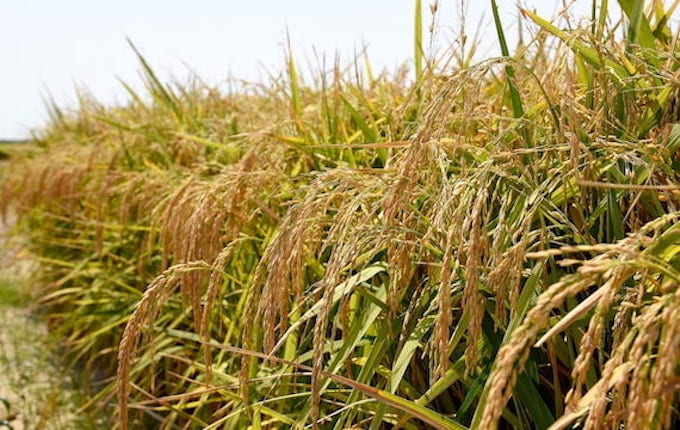
Something like 10,000 years ago, humans in various parts of the world developed an intimate relationship with grass plants. We began to cultivate them (or they began to cultivate us) for the sake of their energy-rich seeds.* In Mexico, the grass was corn (maize). In Turkey, wheat and barley. In China and India, rice.

Elaborate food cultures grew up around these grass seeds. In South India, rice is ground and fermented to make dosas and idlis. In Mexico, corn is soaked and simmered with lime or wood ash to make nixtamal for tortillas. Traditional Turkish flatbread is made with a long-fermented sourdough. Each culture revered its central grain, often as a goddess. Think of Ceres/Demeter in the Mediterranean, the Aztec Chicomecoatl. In South India, Lakshmi is associated with rice.

Sounds perfectly lovely, doesn’t it? So why are people worried about grains?

Well, first of all, we don’t seem to revere grains much these days. We used to grind them between two stones; now it’s high temperature, high speed steel roller mills (goodbye enzymes and vitamins). We used to eat whole or roughly polished grains; now our industrial machinery can remove every “extraneous” bit of fiber and color. We used to soak and ferment our grains; now we don’t have time for that sort of thing.

Complex traditional recipes have been supplanted by industrial processes. There’s a serious difference between packaged “sourdough” bread (whipped up in a matter of minutes with rapid rise yeast and a dash of vinegar) and the real thing, which needs a full day or two of fermentation before baking. There’s a serious difference between a bag of “tortilla” chips (ground up corn fried in vegetable oil) and tortillas made from real nixtamal, fried in natural lard.

Those old slow recipes weren’t backwards technology. The old processes make the food more digestible, the nutrients more accessible. (Oh, and they make the food taste better too.)

So, we eat all our grains the old-fashioned way and we’ll be fine, right?

Not quite so fast.

Grains are a high-energy (carbohydrate) food, but they don’t give us too much in the way of protein, fats, minerals and vitamins. Most of us use a lot less energy than our ancestors did. (How many of your ancestors sat around staring at an inanimate object all day?)

A diet too heavy on grains can leave us swimming in energy, but still hungry for the nutrients we’re missing. That doesn’t work out so well. Eat a high-energy, low-nutrient diet for long enough, and you’ll end up depleted and insulin-resistant. Trust me, you don’t want that.

So what’s to be done?

First, remember what I said before: The food that’s good for one person isn’t necessarily good for another person. Any “advice” I give is to be taken with your own personal salt shaker.**

That said, here’s my take on the grain situation:

1. Always eat grains with more nutrient-dense foods. (Butter your bread!)

2. If you don’t lead an active life, don’t eat too much grain.

3. Respect your ancestors — eat traditionally prepared grain foods.

4. Avoid highly processed grain-based “food products” (fat-free / low-fat crackers and chips are the worst).

Whew!

Feel like baking some lovely old-fashioned bread now? Jim Lahey’s recipe (as told by Mark Bittman) is the best place to start. It’s exceedingly simple, you don’t have to knead anything, and it makes incredible, crusty, flavorful bread. All you need is a heavy, oven-safe pot. (The recipe uses white flour, but you can use whole-grain. I’d start with a mix of half and half, though, at least until you get the hang of it.)

Don’t forget the butter!

* Here’s a summary of the various theories about how and why humans started farming. The latest (and my favorite) suggests co-evolution of humans and plants, each adapting to the needs of the other. (And yes, I know, grains are technically fruits rather than seeds. I just like to call them seeds — it’s more poetic, somehow.)

** In my work as an herbalist, I’ve come across people who are so sensitive to carbohydrates that they can’t eat any grain at all, even old-fashioned grain. These people find that even a small serving of grain puts them on a blood sugar roller-coaster that leads to weight gain and all sorts of health problems. How do you know if you’re one of these people? Try it out. Stop eating grains (and sweets) for a while. See how you feel.

(Geeky aside: I have noticed that many of these highly carbohydrate-sensitive people were bottle-fed babies. I think there might be a connection. Here’s a bit of rat-research food for thought.)

Comments (39)

Tell the USDA what’s what.

Remember the USDA Organic Standards debacle? (Summary: the USDA took over the organic “brand” and made it easier for industrial agriculture to make money on it.)

Guess what? They’re after the word “natural” this time.

The Ethicurean has a post about this nefarious business from Walter Jeffries of Sugar Mountain Farm in West Topsham, Vermont (and a lovely place that is, too).

I’d encourage everyone to check out Walter’s post and to register an official comment on the matter with the USDA. (The last day to comment is January 28.)

(Don’t worry, I haven’t forgotten about the “Commonsense Eating” series. I’ll post the next installment shortly.)

Comments (7)

Commonsense eating: I am not you.

One human being is not like another.

You with me?

(Yeah, I know, cue the silly song.)

But it’s self-explanatory, right? The fact that we aren’t clones?

So why is it that in all the fussing and fighting about nutrition, nobody seems to pay attention to this obvious fact?

The food one person needs to eat is not necessarily the same as the food another person needs to eat.

Simple.

Right.

Why do the “experts” act like we’re interchangeable?

Yes, yes, I realize the USDA launched MyPyramid.gov to much fanfare not long ago. But guess what? For those of us who aren’t pregnant or breastfeeding, there are only 12 possible “food patterns” recommended by that system. And all 12 suggest the same mix of foods—they vary only by the number of calories “allowed.” That’s not individualized, folks. (I have a lot of other biting things to say about the USDA recommendations, but I’ll save them for future posts.)

So, what does a person need to know about herself to get a sense of what foods are good for her?

Let’s see…

Ancestors. What did your ancestors eat before industrial food took over? (We evolve with our food, remember?) You don’t need to re-create some mythic ancestral diet, just pay attention to the broad strokes. Say your ancestors were Japanese—they probably didn’t drink much milk. So it might be best to skip the daily 2-3 cups recommended by the USDA. (Of course, it’s likely your digestive system already let you know about that via “lactose intolerance.”)

Don’t worry about this if you’re a mongrel like I am. (Cornwall? Potenza? Donegal? Normandy? Prague? And those are just my mother’s ancestors!) See “the bottom line” below.

Constitution. Someone asked me about her diet recently. She said she ate a “good diet”—mostly salads, fish, and yogurt. But she still didn’t feel well. Thing is, she has a cool constitution. Salads, fish, and yogurt are all cooling foods. So she was giving her body exactly what it didn’t need.

Do you run hot? Tend to irritation and inflammation? Eat cooling foods like, um, salads, fish, and yogurt! Do you tend to cold? Feel drained and depleted? Eat warming foods like spiced broths and braised meats. Tend to dryness? Eat moistening foods like flax and barley, and make sure you get enough fat. Does your body tend to feel damp and “bogged down”? Drying foods like bitter greens are in order, and be sure to go easy on grains. Notice a pattern here?

It goes beyond the traditional hot/cold, moist/dry constitutional categories too, of course. Some people just need more of certain foods than other people do. (Again, see “the bottom line” below.)

Climate. Live in a dry climate? You need more moistening foods. Hot climate? Cooling foods. You get the point. The same goes for seasons in temperate climates. Salads in the summer, soups in the winter. (You know this already, don’t you? Yep, see “the bottom line” below.)

Lifestyle. So, if you’re a logger you can probably afford to eat more grains and other carbohydrates than someone who types all day can. Hell, you need to eat more of everything. Your body will tell you. (You guessed it—see “the bottom line” below.)

The bottom line. You know better than any “pyramid” or diet book (or blog post!) what your body needs. Really, you do. Just pay attention.

Comments (16)

Commonsense eating: basics.

There were questions about nutrition after my posts on lard and schmaltz. So this is the first post in a series on Commonsense Eating.

I’m really rather conservative when it comes to food. Here are my basic principles:

Food is edible; industrial byproducts are not.

Remember how crisco was invented? That should have been a clue to the fact that it isn’t food.

Food comes from farms, not from factories.

So, it should be obvious, but Confined Animal Feeding Operations (CAFOs) are not farms. They are factories. The meat they produce may look like meat, but it’s not food. (Sneaky, I know.)

If your (or someone else’s) great-great-great-grandmother wouldn’t recognize it as food, it probably isn’t.

This is a good way to avoid industrial “food.” (What would the grandmothers have thought of those all-vegetable “chicken nuggets”? Probably not much.)

Best to respect food traditions.

Humans are mammals, and we evolve with our food. We don’t develop food traditions in a vacuum. Remember the tragedy of pellagra? That happened because our ancestors depended on the native food (corn) without the native tradition (nixtamalization).

Comments (15)

« Previous entries