Commonsense eating: grains of energy.
There’s nothing so controversial these days as a loaf of bread.
Is it the staff of life?
The harbinger of fat?
A miracle of fermentation?
A veritable gluten-laced poison?
Are grains even fit for human consumption? How can we untangle this mess?
Humans are omnivores. We eat all kinds of food. We eat animals, we eat plants. And we eat the seeds of plants.
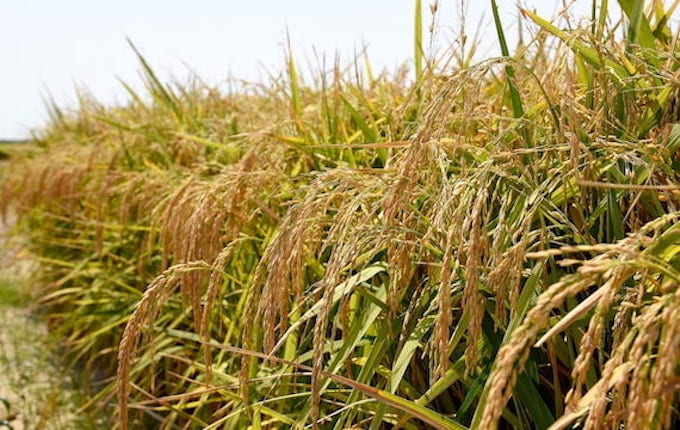
Something like 10,000 years ago, humans in various parts of the world developed an intimate relationship with grass plants. We began to cultivate them (or they began to cultivate us) for the sake of their energy-rich seeds.* In Mexico, the grass was corn (maize). In Turkey, wheat and barley. In China and India, rice.
Elaborate food cultures grew up around these grass seeds. In South India, rice is ground and fermented to make dosas and idlis. In Mexico, corn is soaked and simmered with lime or wood ash to make nixtamal for tortillas. Traditional Turkish flatbread is made with a long-fermented sourdough. Each culture revered its central grain, often as a goddess. Think of Ceres/Demeter in the Mediterranean, the Aztec Chicomecoatl. In South India, Lakshmi is associated with rice.
Sounds perfectly lovely, doesn’t it? So why are people worried about grains?
Well, first of all, we don’t seem to revere grains much these days. We used to grind them between two stones; now it’s high temperature, high speed steel roller mills (goodbye enzymes and vitamins). We used to eat whole or roughly polished grains; now our industrial machinery can remove every “extraneous” bit of fiber and color. We used to soak and ferment our grains; now we don’t have time for that sort of thing.
Complex traditional recipes have been supplanted by industrial processes. There’s a serious difference between packaged “sourdough” bread (whipped up in a matter of minutes with rapid rise yeast and a dash of vinegar) and the real thing, which needs a full day or two of fermentation before baking. There’s a serious difference between a bag of “tortilla” chips (ground up corn fried in vegetable oil) and tortillas made from real nixtamal, fried in natural lard.
Those old slow recipes weren’t backwards technology. The old processes make the food more digestible, the nutrients more accessible. (Oh, and they make the food taste better too.)
So, we eat all our grains the old-fashioned way and we’ll be fine, right?
Not quite so fast.
Grains are a high-energy (carbohydrate) food, but they don’t give us too much in the way of protein, fats, minerals and vitamins. Most of us use a lot less energy than our ancestors did. (How many of your ancestors sat around staring at an inanimate object all day?)
A diet too heavy on grains can leave us swimming in energy, but still hungry for the nutrients we’re missing. That doesn’t work out so well. Eat a high-energy, low-nutrient diet for long enough, and you’ll end up depleted and insulin-resistant. Trust me, you don’t want that.
So what’s to be done?
First, remember what I said before: The food that’s good for one person isn’t necessarily good for another person. Any “advice” I give is to be taken with your own personal salt shaker.**
That said, here’s my take on the grain situation:
1. Always eat grains with more nutrient-dense foods. (Butter your bread!)
2. If you don’t lead an active life, don’t eat too much grain.
3. Respect your ancestors — eat traditionally prepared grain foods.
4. Avoid highly processed grain-based “food products” (fat-free / low-fat crackers and chips are the worst).
Whew!
Feel like baking some lovely old-fashioned bread now? Jim Lahey’s recipe (as told by Mark Bittman) is the best place to start. It’s exceedingly simple, you don’t have to knead anything, and it makes incredible, crusty, flavorful bread. All you need is a heavy, oven-safe pot. (The recipe uses white flour, but you can use whole-grain. I’d start with a mix of half and half, though, at least until you get the hang of it.)
Don’t forget the butter!
* Here’s a summary of the various theories about how and why humans started farming. The latest (and my favorite) suggests co-evolution of humans and plants, each adapting to the needs of the other. (And yes, I know, grains are technically fruits rather than seeds. I just like to call them seeds — it’s more poetic, somehow.)
** In my work as an herbalist, I’ve come across people who are so sensitive to carbohydrates that they can’t eat any grain at all, even old-fashioned grain. These people find that even a small serving of grain puts them on a blood sugar roller-coaster that leads to weight gain and all sorts of health problems. How do you know if you’re one of these people? Try it out. Stop eating grains (and sweets) for a while. See how you feel.
(Geeky aside: I have noticed that many of these highly carbohydrate-sensitive people were bottle-fed babies. I think there might be a connection. Here’s a bit of rat-research food for thought.)