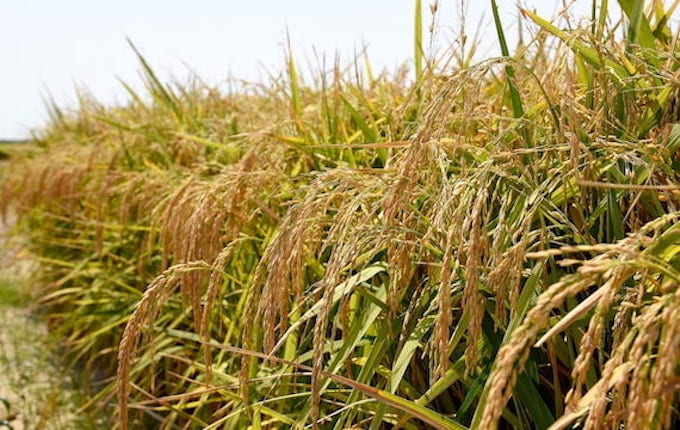
Archive for Flax

Flax in the bedroom.

No, I don’t mean linen sheets, though those are nice too.

Remember the mucilaginous flax seed tea? The slippery-slimy flax hair gel?

What does that stuff remind you of?

Come on, now. Don’t be shy.

Yes, ladies and gentlemen, gooey flax tea makes a great personal lubricant!

Homemade lube. How cool is that?

I really should have thought of this before. The lovely Vermont herbalist Dana Woodruff mentioned it to me the other day, and I just about smacked myself in the forehead, cartoon-style. Of course! (It’s exactly the texture of . . . well . . . ovulation!)

Dana got the idea from Sheri Winston, sex-ed teacher / retired midwife (and sister to herbalist David Winston). Sheri’s recipe calls for 1 cup of flaxseeds and 6 cups of water, simmered for 6 minutes and left to infuse for 6 more before straining.

My first response to that recipe is that the quantities are way too large (unless you plan to give some away to all your friends). We’re talking about a perishable product here, so I’d suggest making only a cup or two at a time.

And I don’t think you need such a high concentration of flax seeds in the mix, either. A little goes a long way, especially if you simmer it for longer.

Here’s my recipe:

Simmer 1 tablespoon of flax seeds in 1 cup of water until it’s reduced by half (maybe 20 minutes). Strain immediately. (If you let it cool, it’ll be too thick to strain.)

Store it in the fridge when you don’t need it — it’ll only keep for a couple of days unrefrigerated.

You could experiment with scents and flavors — just add herbs or spices to the simmering pot! (Start with small amounts, though — too much of a strong herb or spice could cause burning in sensitive areas. I’d avoid essential oils for the same reason. And though it might be tempting, I’d stay away from sugar, as it can lead to infections.)

According to Sheri, the basic lube is condom-safe (it’s completely water-based). But if you do plan to use it with condoms, be sure not to add any ingredients that might damage the latex — i.e., nothing oily or caustic.

Have fun!

Comments (15)

Simmering: winter fun with stockpot and teapot.

This month’s herbal blog party is “Winter Recipes,” hosted by Dreamseeds.

Most of my winter herbal recipes involve long-simmering pots on the back of my woodstove. Tasty broths and teas that warm a person from the inside out, and make the house smell good too.

Winter is a time for concentrated, warm foods. Put away the leafy summer herbs, and get out the roots, seeds and spices. Valerian, licorice, sarsaparilla. Flaxseeds, cardamom, nutmeg. Cinnamon, ginger, cloves.

The best way to stay healthy in the winter is not to fight the fact that it’s winter. In winter, things move more slowly. We need to sleep more. We need richer, fattier foods. In winter, as mammals, we need to stay warm. (It’s quite common for people to forget to dress warmly enough for the season. It’s not unreasonable to wear a scarf indoors if you live in a drafty house.)

Good long-simmered bone broth is the best winter food I know. It’s rich in protein (gelatin) and minerals, and it warms you “to the bone.” Add some vegetables and call it soup. Use it to cook rice or beans. Or just drink it straight with a pinch of salt.

Here’s how to keep a stockpot:

1. Always save bones. (Yes, even bones that people have gnawed on. All that simmering will take care of any contamination.) Keep them in a jar or a bag in your freezer. You can separate them by animal if you like, or lump them all together for “mixed stock.”

2. When you’ve collected a good pile of bones, put them in a pot and cover them with cold water. (You can add a dash of vinegar if you like, to help draw minerals from the bones.) Put the pot over low heat. Let it come to a gentle simmer. If you’re using a gas or electric stove, turn the heat down as far as it will go. If you’ve got the stock on a woodstove, move it to a cool corner or put it up on a trivet. (I’m told you can make stock in a crockpot, too. But I’ve never used a crockpot, so I don’t know how that works.)

3. Leave the stock on gentle, low heat for 12-48 hours. (Yes, I know that’s a long time. It really does make the best stock, though.) Check on the stock every once in a while and add water if it needs it. If you’re using raw bones, there will likely be quite a bit of foamy scum that comes to the surface. Just skim it off — a little tea strainer works well for this. Try not to let the stock boil. Low heat is best for extracting gelatin. (Don’t kick yourself if it accidentally boils, though. Just turn it down. Your stock may be a little cloudy, but it will taste fine.)

4. When you can’t stand it any longer, strain out the bones. If there is a lot of fat on top, skim it off and save it for cooking (a little jar of fat in the fridge is a lovely thing). Now you have stock to play with! What will you make?

You can add warming winter spices to your stock if you like. But my favorite way to take warming spices is in tea. In winter, my “teas” are usually decoctions, simmered on the stove until they perfume the house.

Here are some of my favorite winter teas.

For people who get dry and cold in the winter: flaxseeds (Linum usitatissimum), cassia / cinnamon (Cinnamomum aromaticum), ginger (Zingiber officinale), cloves (Syzygium aromaticum), cardamom (Elettaria cardamomum) and nutmeg (Myristica fragrans).

For people who get a lot of sore throats and swollen lymph nodes in the winter: echinacea root (Echinacea angustifolia or Echinacea purpurea), red root (Ceanothus americanus), marshmallow root (Althaea officinalis).

For people who feel drained in the winter: wild sarsaparilla (Aralia nudicaulis), licorice (Glycyrrhiza glabra), ginseng (Panax quinquefolius) (use only organic ginseng, “woods-grown” if possible).

For people who get cold hands and feet in the winter: valerian (Valeriana officinalis), cramp bark (Viburnum opulus), wild ginger (Asarum canadense) (harvest wild ginger only if it’s locally abundant; “regular” ginger can be used instead).

Oh, yes, and for everyone, because it’s so tasty: pink ginger tea. (This is, of course, one of the best things to drink when you’re down with the flu.)

Happy simmering!

Comments (16)

Old-fashioned flax hair gel.

Remember the flax seed tea?

It doubles as hair gel. Really.

A soothing, conditioning hair gel (not like drying, alcohol-based commercial gels).

This is what the flappers used to set their pin curls in the twenties.

Just make the tea,* strain out the seeds while it’s hot, and let it cool. Hair gel.

You can add a few drops of essential oil (I like lemongrass or grapefruit) to preserve it and make it smell nice. But that’s it.

I have very unruly hair. The flax gel keeps it in pleasant curls rather than unbearable frizz. I just rub it through my hair while it’s damp, and let it dry.

Easy, cheap, and fun.

* For hair gel, I simmer 1 tablespoon of flax seeds in 1 cup of water until the liquid is reduced by half. (I use only a teaspoon of the seeds if I want to drink the tea.)

Comments (17)

Soothing flax seed tea.

flaxtea.JPGThe boy was sick this past weekend, and I was reminded about the lovely soothing properties of flax seed tea (Linum usitatissimum).

Flax is a classic demulcent. The seeds are rich in mucilage, like marshmallow or slippery elm. But flax isn’t so cooling as marshmallow or threatened in the wild like slippery elm.

Flax seed tea is amazing for soothing irritated mucous membranes. Think raw: sore throat; esophagus irritated from vomiting; “irritable bowel syndrome”; lungs irritated from coughing; kidneys and bladder irritated from passing stones.

Its neutral “temperature” makes flax tea good for all sorts of people, including those with constitutions on the cool side. It tastes especially nice with a pinch of warming cinnamon.

The way I make it, it’s really a decoction rather than a tea. Here’s what I do:

Put flax seeds in a small pot with 1 cup of water per teaspoon of seeds.

Simmer gently until the liquid is reduced by half.

Drink hot. (If you let it cool, it will be the texture of raw egg white.)

You can add honey if you like, or warming spices if they’re indicated. But I like the mildly nutty taste of the plain tea.

Next: flax tea as a beauty aid. (They don’t call it usitatissimum for nothing!)

Comments (11)